Restaurant Licensing & FSSAICompliance in India
Quick Answer
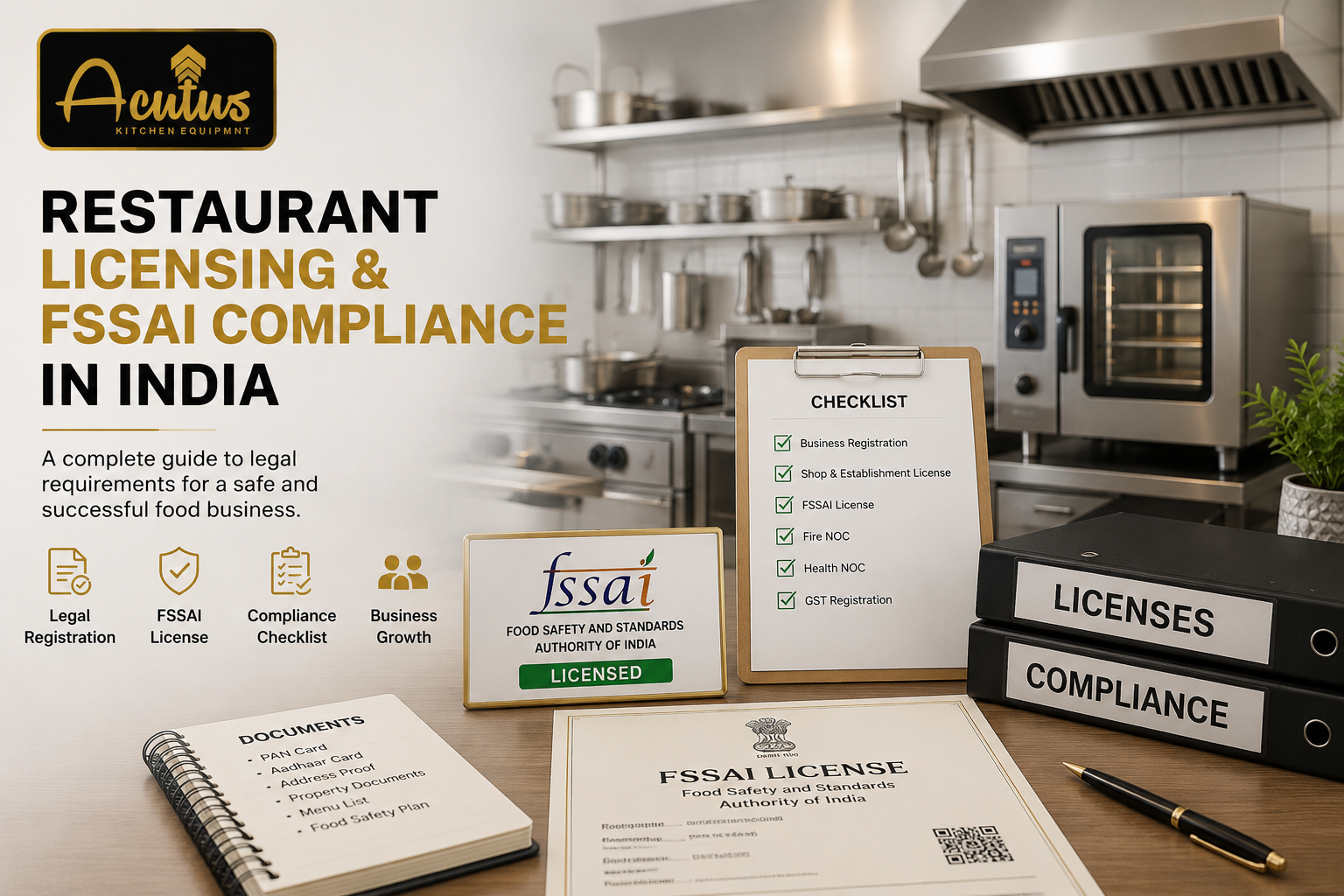
Every food business in India needs a core set of approvals before opening: business registration, Shop & Establishment license, FSSAI license, Fire NOC, Health NOC, and GST registration once turnover crosses the threshold. Keep PAN, Aadhaar, address proof, property documents, your menu, and a food safety plan ready — incomplete documentation is the most common cause of delay.
Getting your kitchen equipment right is only half the job of opening a food business in India — the other half is making sure you're legally allowed to operate it. Licensing gets treated as an afterthought more often than it should, and missing documentation is one of the most common reasons a launch gets delayed.
This guide covers the core approvals almost every restaurant, cloud kitchen, or food outlet needs in India, what documents to keep ready, and where your kitchen equipment itself fits into compliance.
Why Licensing Matters
Operating without the right licenses isn't just a legal risk — it's a business risk. Delivery platforms, landlords, and even suppliers increasingly ask for proof of FSSAI registration before onboarding you, and an unlicensed kitchen can be shut down mid-operation, losing you far more than the cost of getting licensed properly upfront.
What Is FSSAI Licensing?
The Food Safety and Standards Authority of India (FSSAI) regulates and licenses every business involved in manufacturing, processing, storing, distributing, or selling food. Depending on your annual turnover and scale, you'll fall into Basic Registration, a State License, or a Central License — each with different documentation and inspection requirements.
For most new restaurants and cloud kitchens, this is the single most important license to get right early, since it underpins almost every other approval and partnership you'll need afterward.
The Full Compliance Checklist
| Requirement | What It Covers |
|---|---|
| Business Registration | Registering your legal business entity before you can apply for other licenses. |
| Shop & Establishment License | Mandatory registration for operating any commercial premises in most states. |
| FSSAI License | Required for any business that manufactures, stores, distributes, or sells food. |
| Fire NOC | A no-objection certificate confirming your kitchen meets fire-safety requirements. |
| Health NOC | Local municipal health clearance confirming hygiene and sanitation standards. |
| GST Registration | Required once your turnover crosses the applicable threshold, for tax compliance. |
Documents You'll Need
Requirements vary slightly by state and license category — check with your local FSSAI office or a licensing consultant for the exact list applicable to your business.
How Your Equipment Affects Compliance
Your food safety plan and any inspection will look closely at whether your kitchen surfaces and equipment are actually suitable for safe food handling — not just whether you have equipment at all. This is where material grade matters: food-contact surfaces built from proper food-grade stainless steel (typically Grade 304) resist corrosion and are easy to clean and sanitise, which directly supports the hygiene standards your license depends on.
Equipment that's hard to clean, corrodes quickly, or isn't food-safe can become a flagged issue during inspection — worth getting right from the start rather than fixing under pressure later.
Start Early
Apply for FSSAI before finalising your launch date.
Keep Documents Ready
Incomplete paperwork is the most common delay.
Ask a Local Expert
State requirements vary — confirm locally.
Frequently Asked Questions
An FSSAI (Food Safety and Standards Authority of India) license or registration is mandatory for any business that manufactures, processes, stores, distributes, or sells food — including restaurants, cloud kitchens, and food carts. The exact category (Basic Registration, State License, or Central License) depends on your turnover and scale.
Timelines vary by state and license category, but Basic Registration is generally faster than a State or Central License, which involve more documentation and inspection. Applying with complete documentation from the start — including a proper food safety plan — is the biggest factor in avoiding delays.
Commonly required documents include PAN card, Aadhaar card, address proof, property documents (ownership or rental agreement), your menu list, and a food safety plan describing your hygiene and food-handling processes. Specific licenses may ask for additional documents.
Yes — food safety plans and inspections look at whether your equipment and surfaces are suitable for safe food handling, which is where food-grade stainless steel (typically Grade 304) matters. Equipment that's hard to clean, corrodes, or isn't food-safe can be flagged during inspection.
In most states, yes — a Fire NOC and Health NOC are commonly required alongside your FSSAI license and Shop & Establishment registration, regardless of business size, since they cover safety and hygiene rather than turnover. Requirements vary by state and local municipal body, so confirm with your local authority.
Conclusion
Licensing isn't the exciting part of opening a food business, but it's the part that determines whether you can actually open on schedule. Start your FSSAI application early, keep documentation ready, and make sure your equipment supports the hygiene standards your license depends on.
Getting licensed is only the first step — regulations keep evolving after you're open. See our companion piece on staying compliant as FSSAI rules and standards change.
Building a kitchen with food-grade stainless steel equipment from the start makes compliance easier, not harder. Talk to us about equipping a kitchen that's built for it.

Written By
Dhaval PrajapatiFounder of Acutus Kitchen Equipment, with 10 years of hands-on experience in commercial kitchen and stainless-steel equipment manufacturing.
Want a Kitchen Built for Food Safety Compliance?
Every food-contact surface we manufacture is Grade 304 stainless steel. Get in touch for pricing and availability.