Government Regulations& FSSAI Updates Affecting Food Businesses
Quick Answer
Stay updated, stay compliant. FSSAI licensing, food safety standards, labelling rules, and inspection requirements all evolve over time — compliance isn't a one-time task you complete at launch. Food businesses that track updates continuously and stay audit-ready year-round avoid the disruption of scrambling to catch up after a regulatory change.
Most food business owners treat licensing as a box to tick before opening — get the FSSAI license, get the NOCs, start operating. That's the right first step, but it's not the end of the compliance story. Food safety standards, labelling rules, and inspection expectations continue to evolve after you're already open, and staying ahead of those changes is its own ongoing responsibility.
If you're still working through initial licensing, see our step-by-step restaurant licensing and FSSAI compliance guide first. This piece is for businesses already operating, who need to stay compliant as the regulatory landscape shifts.
Why Compliance Is an Ongoing Process, Not a One-Time Task
FSSAI and related regulatory bodies issue notifications and updates through the year — covering everything from hygiene standards to labelling requirements. A food business that treats its initial license as "done" risks falling out of compliance without any active wrongdoing, simply because a standard changed underneath them.
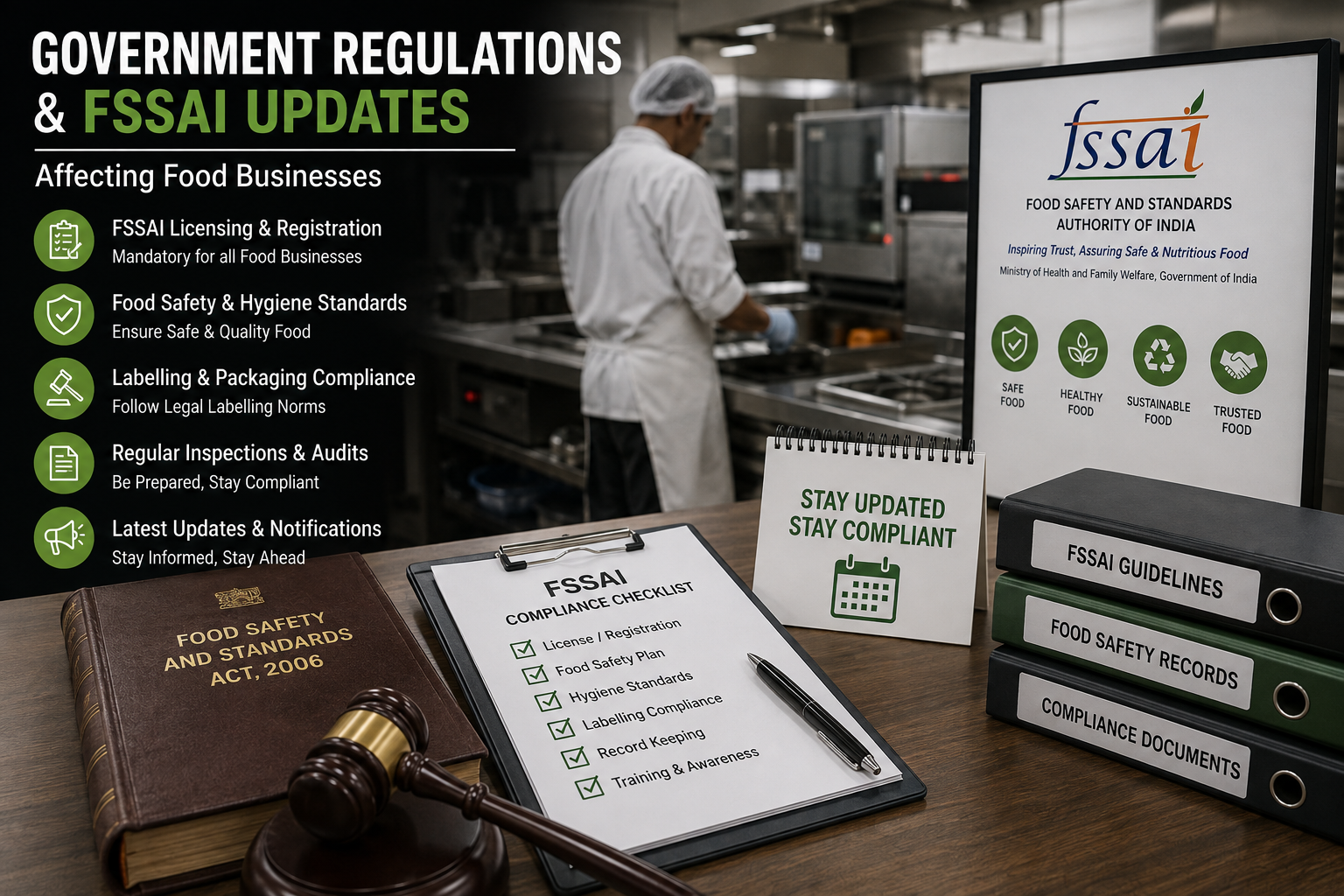
Five Areas Every Food Business Should Track
FSSAI Licensing & Registration
Mandatory for all food businesses — but renewal and category changes need ongoing attention, not a one-time filing.
Food Safety & Hygiene Standards
Standards get updated periodically — what was compliant last year may need adjustment.
Labelling & Packaging Compliance
Legal labelling norms change, especially around nutritional information and packaging material rules.
Regular Inspections & Audits
Being audit-ready year-round beats scrambling to prepare before a scheduled inspection.
Latest Updates & Notifications
FSSAI issues notifications regularly — missing one can mean non-compliance without realising it.
Staying Ahead Instead of Reacting
"Stay updated, stay compliant" is easier said than done without a system. Assign someone on your team (even part-time) to check official FSSAI notifications periodically, keep your food safety plan and hygiene records continuously current rather than reassembled before an inspection, and treat compliance documentation as a living set of records, not a folder you open once a year.
How Your Equipment Fits Into Compliance
Hygiene and food safety standards regularly reference equipment and surface material as part of compliance — easy-to-clean, corrosion-resistant, food-grade stainless steel (typically Grade 304) supports the hygiene standards regulators check for, while worn or corroding equipment can become a flagged issue during inspection, regardless of how well your paperwork is organised.
Frequently Asked Questions
Getting licensed is a one-time process — this is about staying compliant afterward, as food safety standards, labelling norms, and inspection requirements evolve over time. For the step-by-step licensing process itself, see our dedicated guide on restaurant licensing and FSSAI compliance.
FSSAI issues notifications and updates periodically throughout the year, covering everything from labelling requirements to hygiene standards. There's no fixed schedule, which is exactly why treating compliance as an ongoing process — rather than a one-time task — matters.
Consequences range from warnings and fines to license suspension in serious cases, depending on the nature of the non-compliance. Regularly checking official FSSAI notifications, or working with a compliance consultant, is the most reliable way to avoid being caught off guard.
Yes — nutritional labelling, allergen disclosure, and packaging material rules have all seen updates in recent years as food safety standards evolve globally and in India. A label that was compliant when you printed it can become outdated without any change on your part.
Keep documentation (food safety plan, hygiene records, training logs) continuously updated rather than assembled just before an inspection, and do periodic internal reviews against the current FSSAI checklist. Businesses that treat this as routine, not an event, handle inspections with far less disruption.
Conclusion
Getting licensed is the starting line, not the finish line. Food safety standards, labelling rules, and inspection expectations will keep evolving — the businesses that treat compliance as an ongoing habit avoid the disruption of catching up after the fact.
Talk to us about equipment built to support food safety compliance from day one.

Written By
Dhaval PrajapatiFounder of Acutus Kitchen Equipment, with 10 years of hands-on experience in commercial kitchen and stainless-steel equipment manufacturing.
Want a Kitchen Built for Food Safety Compliance?
Every food-contact surface we manufacture is Grade 304 stainless steel. Get in touch for pricing and availability.