Sustainability inCommercial Kitchens
Quick Answer
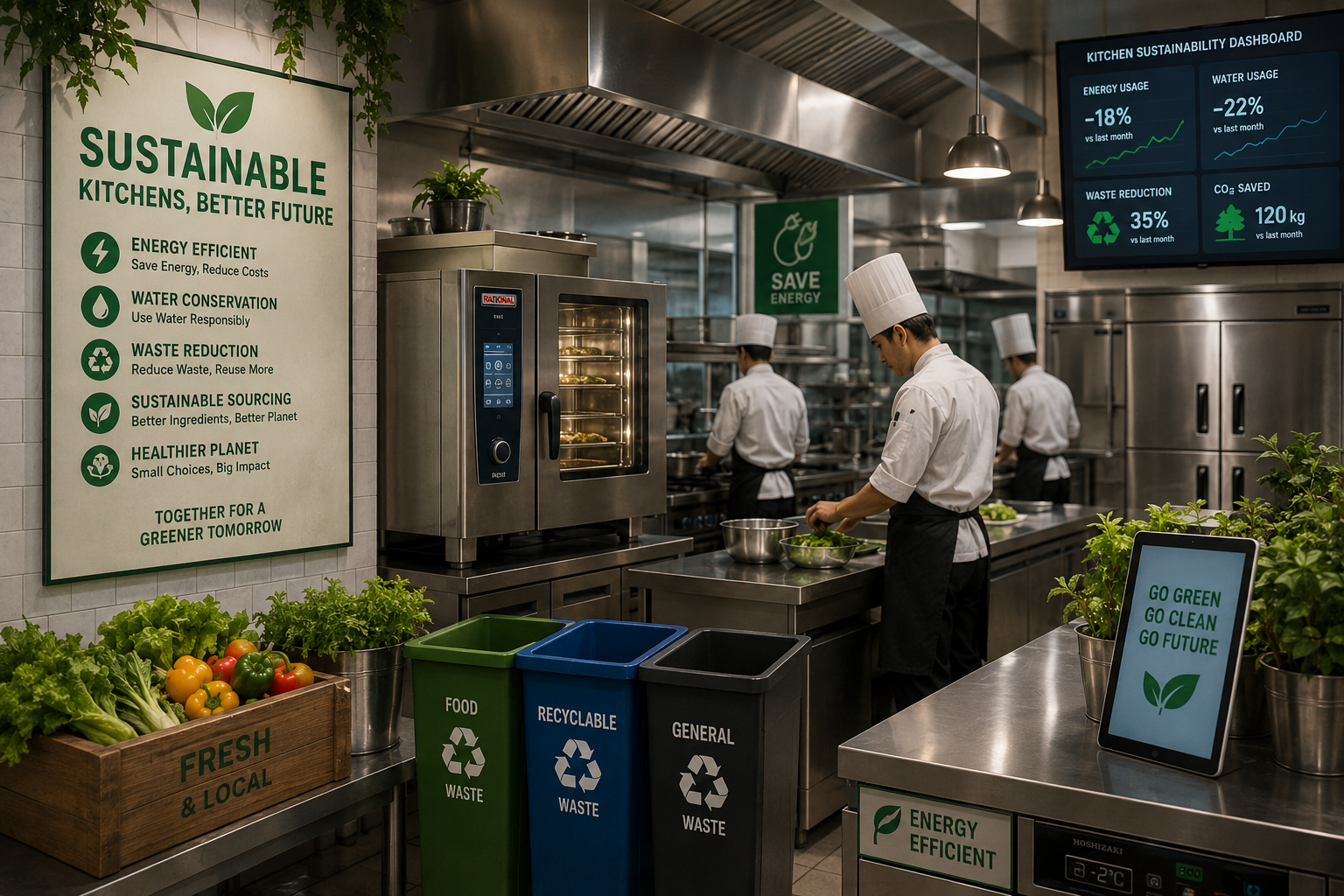
Sustainable kitchens, better future. Commercial kitchens are increasingly tracking energy usage, water consumption, and waste reduction as operational metrics — not just for environmental reasons, but because efficiency directly lowers costs. Energy-efficient equipment, segregated waste handling, and durable, long-lasting equipment are the practical starting points.
Sustainability in commercial kitchens used to be treated as a marketing talking point. Increasingly, it's becoming an operational metric — kitchens tracking energy usage, water consumption, and waste reduction the same way they track food cost or labour cost, because the numbers translate directly into savings.
This piece breaks down the practical pillars of a sustainable kitchen, where equipment fits into that picture, and how to actually measure progress instead of just intending to.
Why Sustainability Is Becoming a Kitchen Priority
Rising utility costs make energy and water efficiency a direct line to the bottom line, not just a values statement. At the same time, customers — particularly younger diners — increasingly notice and reward businesses that visibly reduce waste and source responsibly, making sustainability both a cost lever and a brand differentiator.
Five Pillars of a Sustainable Kitchen
Energy Efficient
Save energy, reduce costs
Water Conservation
Use water responsibly
Waste Reduction
Reduce waste, reuse more
Sustainable Sourcing
Better ingredients, better planet
Healthier Planet
Small choices, big impact
The Role Equipment Plays
Equipment sits at the centre of most sustainability gains in a kitchen. Energy-efficient ovens and refrigeration reduce the largest utility costs directly. Beyond running costs, durable, well-built equipment is itself a sustainability choice — a machine that lasts years longer than a cheaply-built alternative means fewer replacements, less manufacturing waste, and less equipment sent to landfill.
This is one of the reasons build quality matters beyond day-to-day performance — see our comparison of stainless steel grades for how material choice affects both durability and long-term waste.
Measuring Progress
Sustainability efforts stay vague without a baseline to measure against. Track energy usage, water usage, and waste volume month-over-month rather than making one-time estimates — this is what turns "we're trying to be more sustainable" into a number you can actually report and improve on.
Frequently Asked Questions
Rising utility costs, growing customer awareness, and increasing regulatory attention on food-business waste are pushing kitchens to treat sustainability as an operational priority rather than a marketing add-on. Energy and water savings also directly reduce operating costs, giving it a clear business case beyond environmental impact.
Often yes, but the gap is usually recovered through lower utility bills over the equipment's working life — similar to how better-built equipment costs more but saves money through durability. Ask suppliers for energy consumption figures to compare real running costs, not just purchase price.
Segregated waste bins (food waste, recyclables, general waste) are a simple starting point that makes waste reduction visible and trackable. Beyond that, portion control and inventory management to reduce food waste at the source typically have the biggest impact.
It varies by kitchen size and current equipment age, but kitchens actively tracking usage and switching to more efficient equipment commonly report meaningful year-over-year reductions in both energy and water usage — tracked against a monthly baseline rather than a one-time estimate.
Yes — equipment built to last longer reduces the manufacturing and disposal footprint of constantly replacing worn-out machines. Durable, repairable equipment is itself a sustainability choice, not just an ingredient-sourcing one.
Conclusion
Sustainability in commercial kitchens isn't a single purchase decision — it's a combination of equipment choices, daily habits, and ongoing measurement. Start with the biggest utility costs, track progress monthly, and treat equipment durability as part of the sustainability equation, not separate from it.
Talk to us about equipment built for both efficiency and longevity.

Written By
Dhaval PrajapatiFounder of Acutus Kitchen Equipment, with 10 years of hands-on experience in commercial kitchen and stainless-steel equipment manufacturing.
Want Equipment Built for Efficiency & Longevity?
Get in touch for pricing and availability on equipment that lowers running costs and lasts.