Rise of Cloud Kitchens &Delivery-First Restaurants in India
Quick Answer
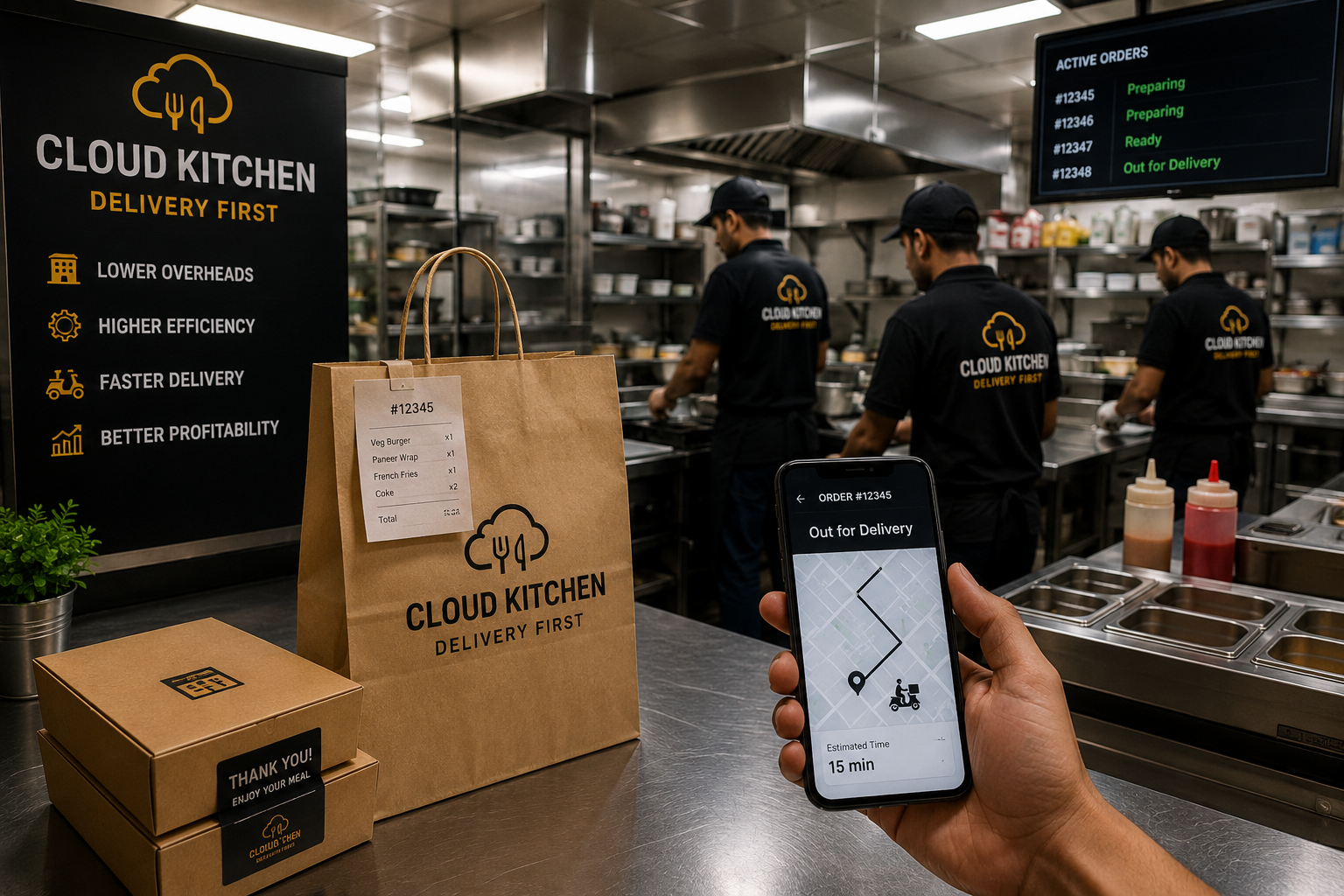
Cloud kitchens and delivery-first restaurants are growing across India because they offer lower overheads, higher operational efficiency, and better profitability than traditional dine-in formats. They're not replacing restaurants outright, but the shift changes what equipment and kitchen layout actually matter most.
The last few years have seen a steady shift in how new food businesses in India choose to launch — more of them are skipping the dine-in restaurant entirely and starting as delivery-first operations from day one. This isn't a passing trend; it reflects real changes in cost structure, consumer behaviour, and how food businesses can scale.
This piece looks at what's driving that shift, why it matters for anyone planning a kitchen, and the risks worth planning for before committing to a delivery-first model.
What's Driving the Delivery-First Shift
Lower Overheads
No dine-in space or front-of-house staff to fund, freeing up capital for kitchen capacity.
Higher Efficiency
Kitchens designed purely for cooking and packing operate with fewer wasted steps.
Faster Delivery
Delivery-app integration and dense urban placement cut delivery time expectations.
Better Profitability
Lower fixed costs mean a larger share of each order's revenue reaches the bottom line.
Why This Matters for Kitchen Operators
For anyone planning a new food business, the delivery-first model changes the calculus on where capital goes. Instead of investing in dining space, furniture, and front-of-house presentation, more of the budget can go directly into production capacity — better ovens, faster fryers, more reliable holding equipment — since the customer never sees the kitchen itself.
What This Means for Kitchen Equipment
A delivery-first kitchen doesn't need equipment designed for tableside presentation, but it needs equipment that holds up to continuous, high-volume production — since order volume through delivery apps can spike unpredictably. Packaging stations, holding and warming equipment that keeps food quality stable during transit, and fast-recovery cooking equipment matter more here than in a dine-in kitchen.
See our detailed breakdown of what a delivery-first kitchen actually needs in our cloud kitchen equipment checklist.
Risks to Plan For
The delivery-first model isn't risk-free. Heavy reliance on third-party delivery platforms means commission fees cut directly into margins, and customer loyalty often sits with the platform rather than the kitchen brand. Operators who diversify order sources — direct ordering alongside multiple delivery platforms — reduce this exposure considerably.
Frequently Asked Questions
Lower overheads (no dine-in space or front-of-house staff), rising smartphone-based food delivery adoption, and the ability to run multiple delivery-only brands from a single kitchen are the main drivers. It's a lower-barrier way to enter the food business compared to a traditional restaurant.
Not entirely — they're growing alongside traditional restaurants rather than replacing them outright. Dine-in experiences still have demand that delivery-only models can't serve, but the growth rate in delivery-first formats has been significantly faster in recent years.
Delivery-first kitchens prioritise cooking speed and consistency over presentation-focused equipment, since food travels before it's seen by the customer. Packaging stations, holding/warming equipment, and equipment that keeps food quality stable during transit time become more important.
Heavy reliance on third-party delivery platforms means commission fees eat into margins, and brand loyalty is often to the platform rather than the kitchen. Diversifying order sources (direct ordering, multiple platforms) reduces this dependency risk.
Yes — many restaurants run a delivery-first "virtual brand" out of their existing kitchen during off-peak hours, using the same equipment for a different menu. This requires equipment flexible enough to handle both dine-in and delivery-optimised workflows.
Conclusion
Delivery-first formats aren't a replacement for the traditional restaurant — they're a growing, parallel path into the food business, with a different cost structure and different equipment priorities. Whether you're launching a cloud kitchen or adding a delivery-only brand to an existing restaurant, plan the kitchen around production capacity and consistency first.
Talk to us about equipping a kitchen built for delivery-first volume.

Written By
Dhaval PrajapatiFounder of Acutus Kitchen Equipment, with 10 years of hands-on experience in commercial kitchen and stainless-steel equipment manufacturing.
Building a Delivery-First Kitchen?
Get in touch and we'll help you plan equipment built for continuous, high-volume production.