New vs Second-Hand Commercial KitchenEquipment: What to Know Before You Buy
Quick Answer
Second-hand equipment can work for low-use or non-critical items on a tight budget, but for anything running daily — fryers, ovens, mixers, refrigeration — the unknown wear, missing warranty, and hidden repair costs usually outweigh the upfront saving. If you do buy used, check its service history, stainless steel grade, and run it for 15–20 minutes before deciding.
Every new food-service business faces this decision early: stretch the budget on new equipment, or cut costs with second-hand machines. There's no single right answer — but there is a clear way to think about which equipment is worth the risk and which isn't.
This guide covers the hidden costs of buying used, when second-hand genuinely can make sense, and what to check if you decide to go that route anyway.
Why This Decision Matters More Than the Price Tag
The sticker price on second-hand equipment is almost always lower — that's the whole appeal. But a commercial kitchen runs equipment for hours every day, often across multiple shifts. Equipment bought to save money upfront that fails within the first year, or that quietly costs more to run, can end up more expensive than paying for new equipment once.
The Hidden Costs of Second-Hand Equipment
No warranty on fabrication or material defects
Second-hand equipment almost always comes with zero manufacturer warranty, so any fault that surfaces after purchase is entirely your repair cost.
Unknown run-hours on motors and heating elements
A mixer or fryer that looks clean on the outside may already be close to the end of its motor or element life — there's no way to verify this without a service history.
Surface wear affects hygiene compliance
Scratched, pitted, or re-polished stainless steel is harder to sanitise properly and can fall short of food-safety expectations during an inspection.
Higher running cost from reduced efficiency
Worn seals, thermostats, and heating elements typically use more power to do the same job, which adds up over months of daily commercial use.
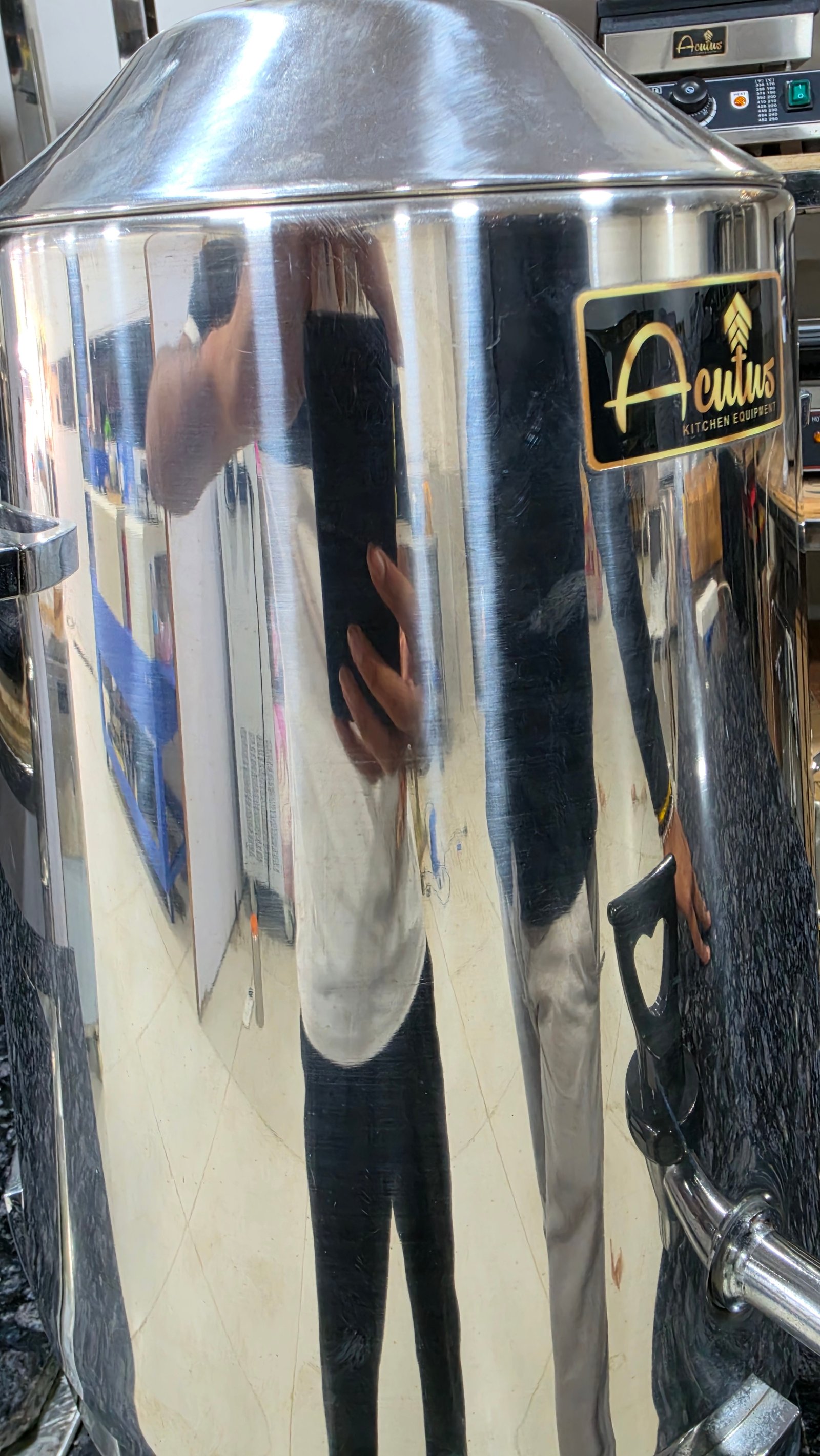
New equipment arrives with a known steel grade, a known build date, and zero run-hours on every motor and heating element. None of that can be verified with certainty on a used machine — you're relying entirely on the seller's word.
That's the real trade-off: second-hand equipment isn't necessarily bad, it's unknown. And unknown condition on equipment that runs all day, every day, is a risk that's hard to price in upfront.
When Second-Hand Can Make Sense
Second-hand isn't automatically a bad decision. It can be a reasonable choice for:
- Low-use, non-critical items — a spare prep table or a rarely-used piece of equipment that isn't on the critical path of daily service.
- Very short-term setups — a pop-up stall or a test kitchen running for a fixed, short period.
- A genuinely tight starting budget, where the alternative is not opening at all — as long as the equipment is inspected properly first.
Equipment Worth Always Buying New
Fryers and ovens — heating elements and thermostats degrade with use, and a fault here is a food-safety and fire-safety risk.
Mixers and other motor-driven equipment — motor wear is invisible from the outside and expensive to diagnose or repair.
Refrigeration and cooling equipment — compressor efficiency drops over time, and older refrigerants may already be difficult to source.
Any equipment that will run daily, multiple shifts a day — the duty cycle makes reliability worth more than the upfront saving.
If You Do Buy Second-Hand, Check This First
- Ask for the equipment's service and maintenance history, not just its age.
- Check the stainless steel grade — ask specifically whether it's 304 or 202, since this isn't always visible to the eye.
- Run the equipment for at least 15–20 minutes to check heating consistency, noise, and vibration, not just a quick power-on test.
- Inspect door seals, gaskets, and electrical cords for wear or damage.
- Confirm gas and electrical connections meet current safety standards before installation.
Why Buying New From a Manufacturer Helps
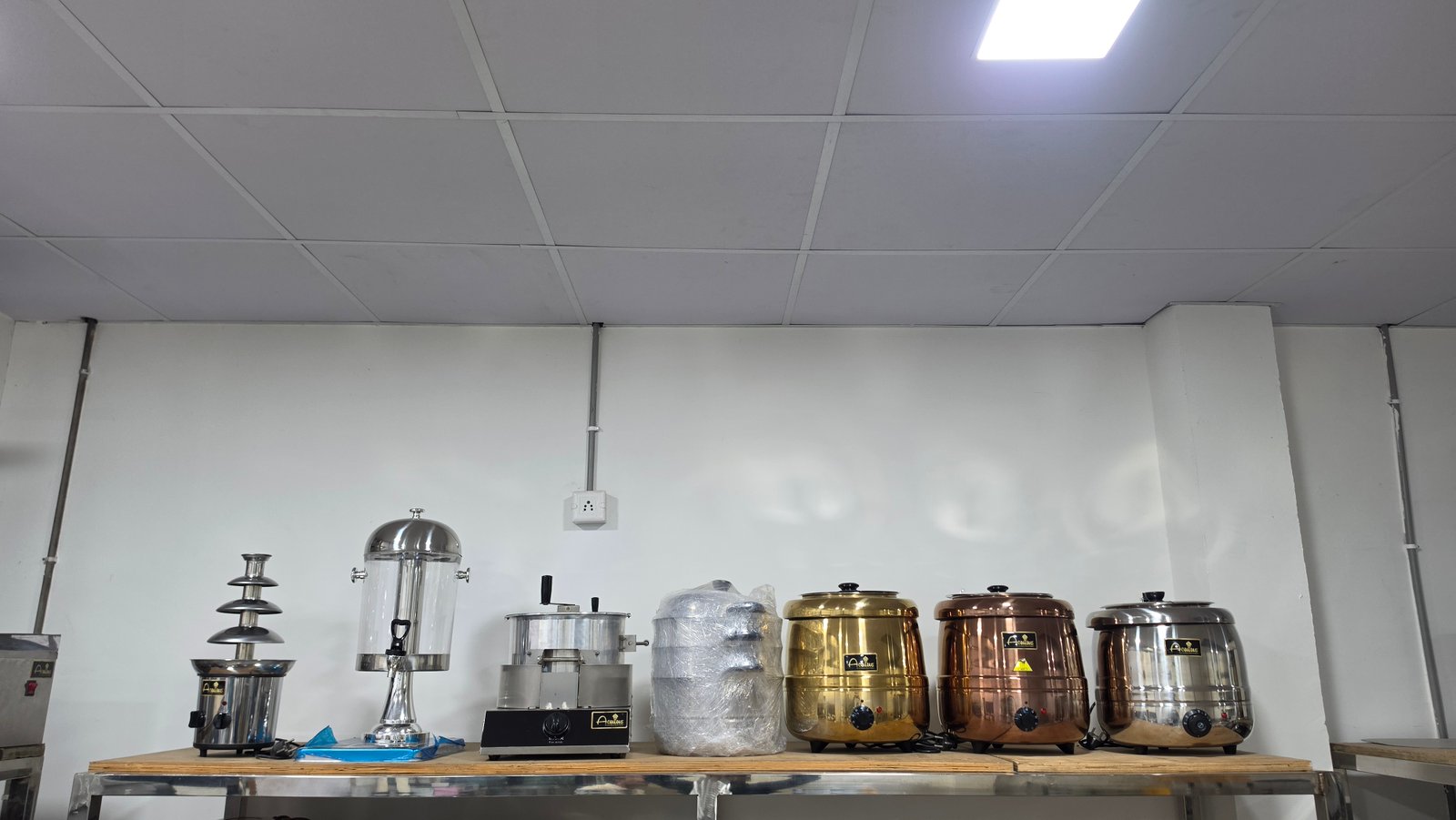
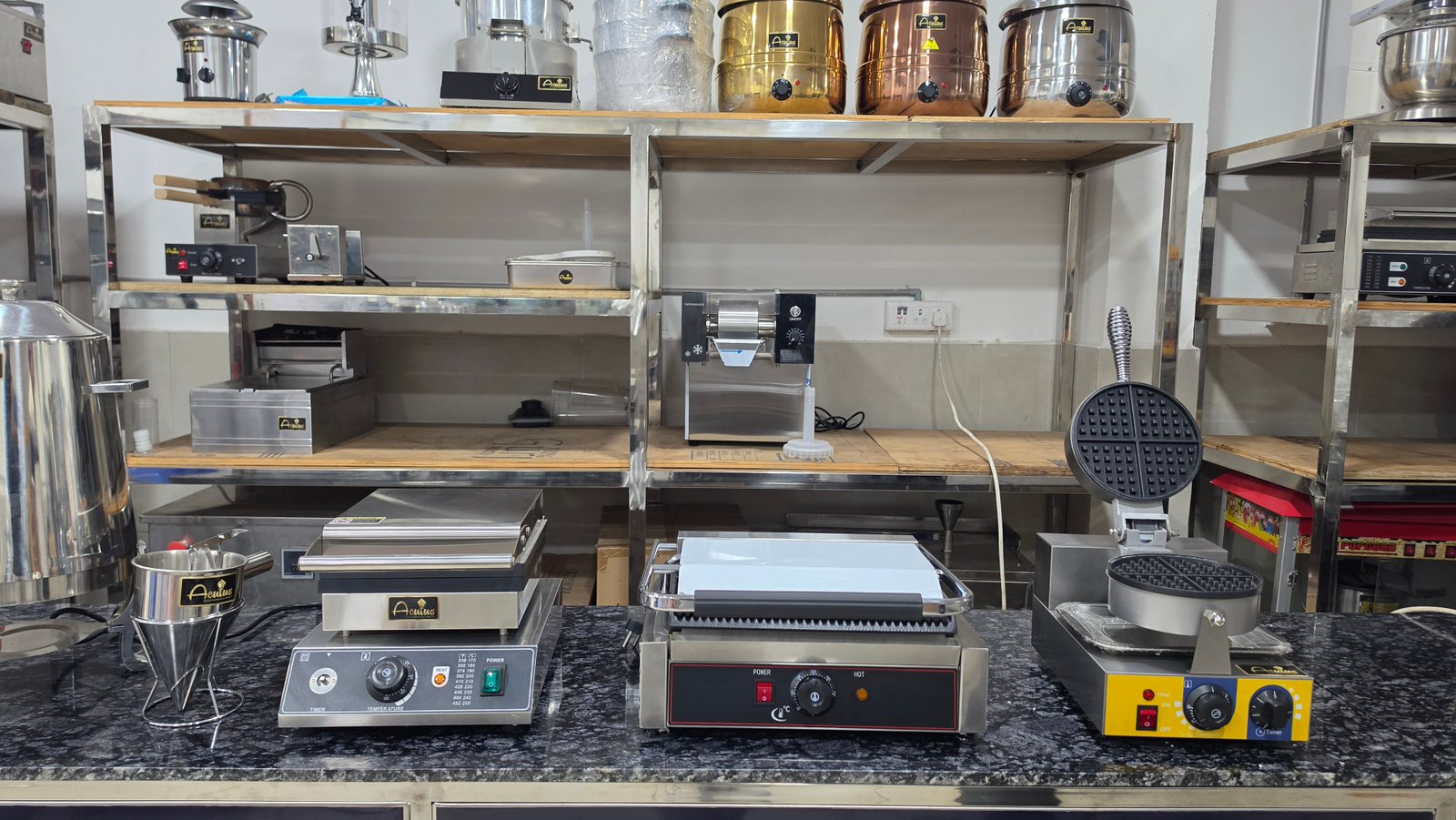
Buying new directly from a manufacturer removes most of the uncertainty: known material grade, a fresh warranty, and equipment built to your kitchen's exact layout rather than adapted to fit. At Acutus, most orders are custom-fabricated in Grade 304 stainless steel and backed by a manufacturer warranty against fabrication and material defects, with a dedicated service team for after-sales support. See our quality and warranty process.
Frequently Asked Questions
It can work for low-use, non-critical items or short-term setups on a tight budget. For equipment that runs daily — fryers, ovens, mixers, refrigeration — the risk of hidden wear and the lack of warranty usually outweigh the upfront saving.
Unknown run-hours and condition. A motor, heating element, or compressor can look fine externally while being close to failure, and there's typically no warranty to fall back on if it breaks down soon after purchase.
It can. Worn or pitted stainless steel is harder to clean and sanitise fully, which matters for FSSAI hygiene requirements and routine inspections.
The upfront price is lower, but repair costs, higher energy use from reduced efficiency, and the chance of early replacement often close most of that gap over a year or two of commercial use.
Ask for its service history, confirm the stainless steel grade, run it for 15–20 minutes to check heating and noise, and inspect seals, gaskets, and electrical connections before installation.
Most Acutus orders are custom-fabricated to a client's exact kitchen layout and budget, backed by a manufacturer warranty — worth comparing against a second-hand quote before deciding.
Conclusion
There's no blanket rule that new always beats second-hand — but for equipment that runs daily under commercial load, the unknowns in a used machine's condition usually cost more than they save. Weigh the upfront saving against the risk of downtime, repairs, and a missing warranty before deciding.

Written By
Dhaval PrajapatiFounder of Acutus Kitchen Equipment, with 10 years of hands-on experience in commercial kitchen and stainless-steel equipment manufacturing.
Get a Free Quote on New Equipment First
See what custom-fabricated, warranty-backed equipment costs before deciding on a second-hand purchase.