How to Choose a KitchenEquipment Manufacturer
Quick Answer
The manufacturer you choose matters as much as the equipment itself. In-house manufacturers typically offer faster lead times, genuine custom fabrication, and direct accountability for build quality — while dealers add a reselling layer that can mean higher cost and slower support. Before choosing a supplier, ask about material grade, whether manufacturing is in-house, installation, warranty terms, and after-sales support — the answers reveal more than any brochure will.
Most equipment comparisons focus entirely on specifications — power rating, capacity, dimensions. Those matter, but they miss the decision that actually determines how well your equipment performs over years of use: who you bought it from, and how that company builds and stands behind what they sell.
Two equally spec'd fryers can have completely different outcomes three years in, depending on whether the company behind them actually manufactures their own equipment, controls their own quality process, and answers the phone when something needs servicing. This guide covers how to evaluate that.
Why the Manufacturer You Choose Matters as Much as the Equipment
Equipment quality isn't only a design or material question — it's also an organisational one. A supplier's manufacturing structure directly shapes your lead time, your ability to get non-standard sizing, how quickly problems get fixed, and whether a warranty claim gets handled in days or drags on for weeks.
That structure comes down to two core decisions worth understanding before you compare quotes: whether the supplier manufactures in-house or outsources/resells, and whether your kitchen needs standard or custom equipment.
In-House Manufacturing vs Outsourced / Dealer-Sourced Equipment
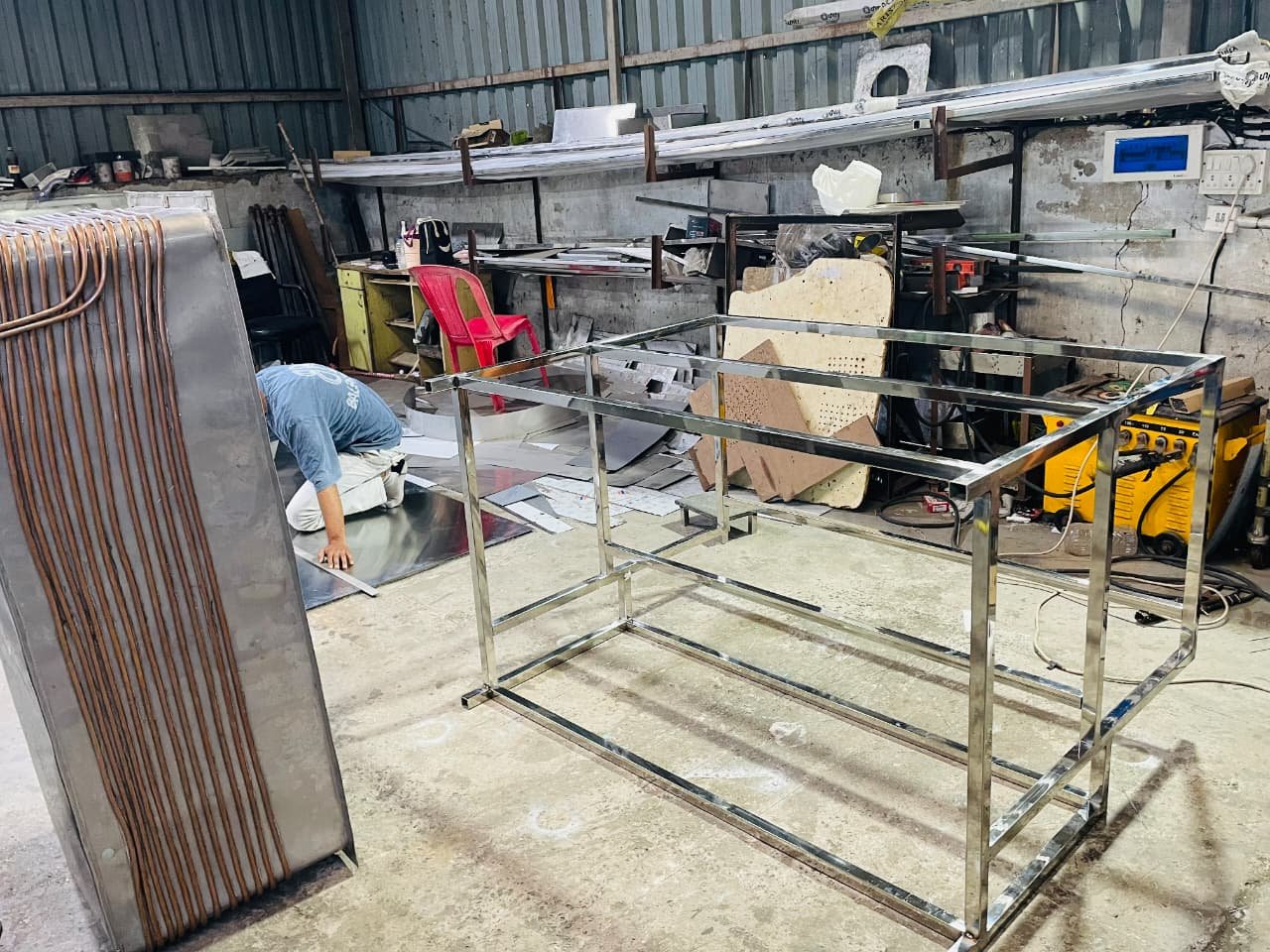
In-house manufacturing means the company selling you the equipment also designs, fabricates, and quality-checks it at their own facility. Outsourced or dealer-sourced equipment means the seller is reselling units built by one or more other factories, often with limited visibility into how those units were actually made.
| Factor | In-House Manufacturer | Dealer / Reseller |
|---|---|---|
| Lead Time | Typically faster — no handoff between vendors | Often slower — depends on the dealer's supplier chain |
| Customisation | Can fabricate to your exact layout and dimensions | Usually limited to catalogue sizes only |
| Accountability | Direct — the manufacturer stands behind their own build | Shared between dealer and original manufacturer |
| Pricing | No reseller markup | Includes a margin for the reselling dealer |
| After-Sales Support | Direct access to the team that built the equipment | Routed through the dealer, which can add delay |
| Quality Consistency | Controlled end-to-end under one roof | Depends on which factory the dealer sources from |
Read more about how Acutus manufactures its equipment and our in-house manufacturing facility in Ahmedabad.
Custom Fabrication vs Standard Catalogue Equipment
Standard equipment is faster and cheaper — use it wherever your kitchen layout allows a catalogue-sized unit to fit. Custom fabrication costs more and takes longer, but is worth it when your space, workflow, or layout genuinely can't accommodate a standard size — counters, sinks, and workstations especially.
The mistake to avoid: forcing a standard unit into a non-standard space just to save on custom fabrication cost, only to lose usable kitchen space or create a workflow bottleneck that costs more in the long run. Learn more about our custom fabrication process.
7 Questions to Ask Before You Choose a Manufacturer
01What stainless steel grade do you use on food-contact surfaces?
This single question filters out suppliers cutting corners on material quality — see our full 304 vs 202 grade guide for context.
02Is the equipment manufactured in-house, or sourced from another factory?
In-house manufacturers can usually offer faster turnaround, direct accountability, and genuine custom fabrication.
03Is installation included, or billed separately?
Installation costs and coordination hassle add up fast if they aren't included upfront.
04What does the warranty actually cover, and for how long?
Get specifics on fabrication and material defect coverage — not just "warranty included" on a quote sheet.
05What's the realistic lead time from order to installed equipment?
Vague answers here often mean the supplier doesn't control their own production schedule.
06How is after-sales service and spare parts handled?
Ask specifically who you call when something breaks, and how quickly they typically respond.
07Can I visit the facility or see references from similar kitchens?
A manufacturer confident in their work will rarely hesitate to show you where and how it's built.
Question one is worth its own read — see our full 304 vs 202 stainless steel guide for how to evaluate a supplier's material claims.
Red Flags to Watch For When Evaluating Suppliers
Vague or evasive answers about which stainless steel grade is used on food-contact surfaces.
Reluctance to put warranty terms in writing before you place an order.
No clear answer on whether equipment is manufactured in-house or sourced elsewhere.
Installation and after-sales support treated as an afterthought, not part of the core offer.
Pressure to finalise an order before you've had a chance to visit the facility or check references.
How We Approach This at Acutus

We manufacture in-house at our own facility in Ahmedabad, use Grade 304 stainless steel on every food-contact surface, and provide on-site installation guidance with every order. We'd rather you ask us the seven questions above and compare the answers than take a sales pitch at face value.
Read more about our quality control process, business registrations, or the founder behind Acutus.
Frequently Asked Questions
Buying directly from a manufacturer means the same company that builds the equipment also handles your order, quality, and after-sales support — typically with faster lead times and no reseller markup. A dealer resells equipment sourced from one or more factories, adding a layer between you and the people who actually built it.
Usually somewhat, since custom work takes more design and fabrication time. Standard catalogue sizes are faster and cheaper where they fit your kitchen — custom fabrication is worth the extra cost specifically where your layout or workflow needs it.
At minimum: what stainless steel grade is used on food-contact surfaces, whether manufacturing is in-house, whether installation is included, what the warranty covers, realistic lead times, and how after-sales support and spare parts are handled.
Ask directly which grade is used on food-contact surfaces, request a material test certificate for large or institutional orders, and ask about their internal quality-control process before equipment is dispatched.
Yes, where possible. A facility visit is one of the fastest ways to judge real build quality and manufacturing capability — far more reliable than a catalogue or a sales call alone.
Conclusion
Specifications tell you what a piece of equipment can do on paper. The manufacturer behind it determines whether it still works the way it should three years from now, and whether someone picks up the phone when it doesn't.
Before you compare another quote on price alone, ask the seven questions in this guide. The answers — or the lack of them — will tell you more about what you're actually buying than any spec sheet.
Written By
Dhaval PrajapatiFounder of Acutus Kitchen Equipment, with 10 years of hands-on experience in commercial kitchen and stainless-steel equipment manufacturing.
Ask Us the Seven Questions
Get in touch and put us through the checklist — we're happy to answer every one of them.