Premium Commercial Popcorn Machinevs Budget Popcorn Machine
Quick Answer
A premium commercial popcorn machine — full stainless-steel body, even heating, higher production capacity — costs more upfront but is built for continuous daily commercial use. A budget popcorn machine costs less to buy but runs into uneven heating, slower output, and shorter working life once it's put under real commercial demand. If popcorn is part of your daily revenue, the premium machine pays for itself; if it's occasional, budget can be a reasonable choice.
"Popcorn machine" covers a huge price range — from a basic table-top unit to a heavy-duty stainless-steel machine built for cinemas, malls, and high-footfall stalls. On a spec sheet they can look similar. In daily commercial use, the gap shows up fast: in how evenly the kernels pop, how much output you get per hour, and how long the machine keeps running without a service call.
This comparison breaks down what actually separates a premium machine like ACUTUS's commercial range from a generic budget popcorn machine, so you can match the machine to how much popcorn your business actually needs to sell.
What Actually Matters in a Commercial Popcorn Machine
Popcorn machines look mechanically simple — a heated kettle, a stirring mechanism, a warming display — but that simplicity is exactly why build quality makes such a visible difference. There's nowhere for a weak component to hide when the machine is running batch after batch, hours a day.
Three things decide how a machine performs under real commercial load: the body material it's built from, how evenly it heats the kernels, and how much it can produce per hour without breaking stride.
Premium vs Budget Popcorn Machine: Feature-by-Feature
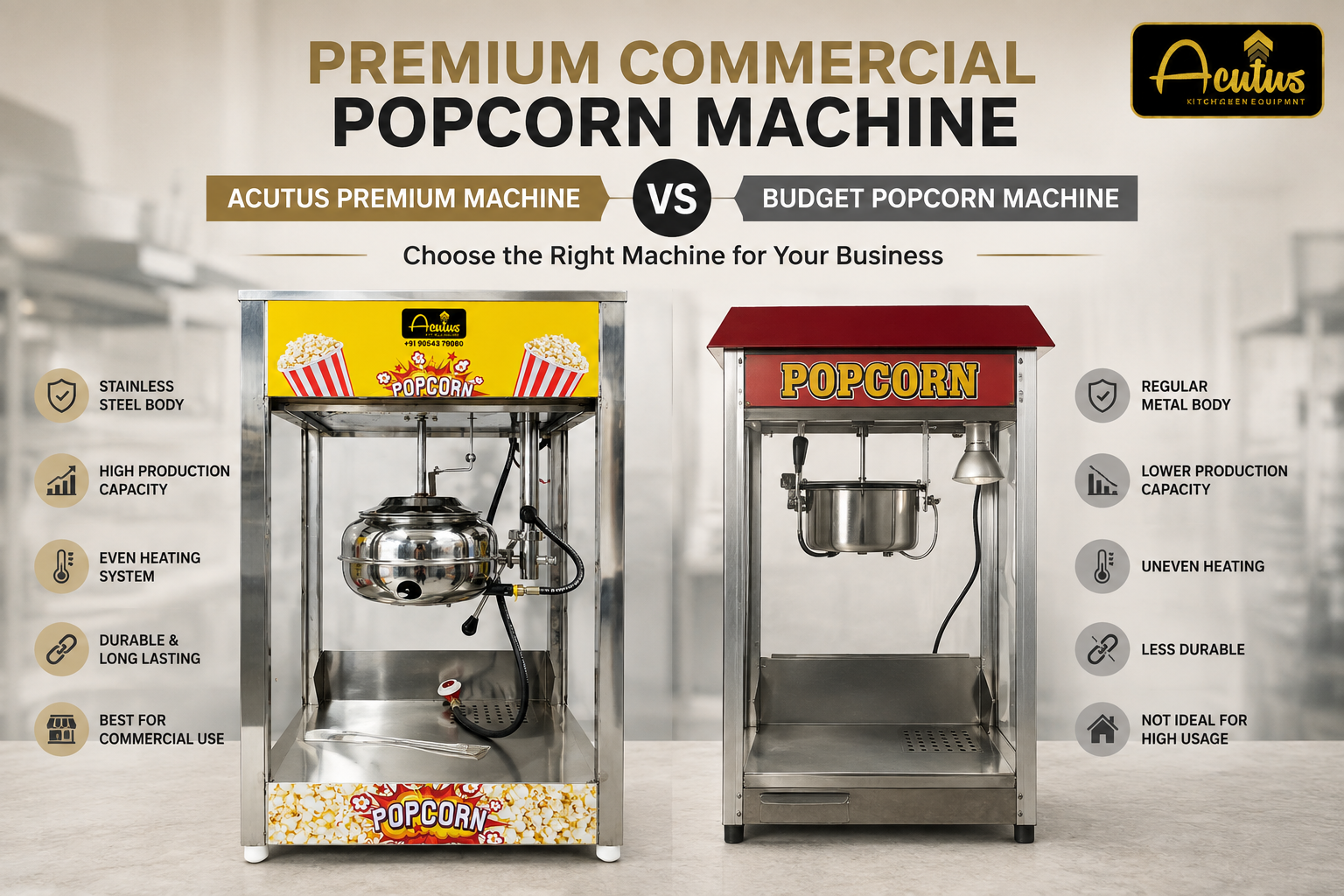
| Attribute | ACUTUS Premium Machine | Budget Machine |
|---|---|---|
| Body Material | Full stainless-steel body — corrosion-resistant, food-safe | Regular/painted metal body — prone to rust and staining |
| Heating System | Even heating system for consistent, fully-popped batches | Uneven heating — more unpopped kernels and scorching |
| Production Capacity | High production capacity for continuous commercial demand | Lower capacity, slows down during peak footfall |
| Durability | Durable, long-lasting construction built for daily use | Less durable — wears out faster under regular commercial use |
| Best Suited For | Cinemas, malls, catering, high-footfall commercial outlets | Occasional or low-volume, non-commercial use |
| Long-Term Value | Higher upfront cost, lower cost-per-kg over its working life | Lower upfront cost, higher risk of early breakdown/replacement |
Body Material & Build Quality
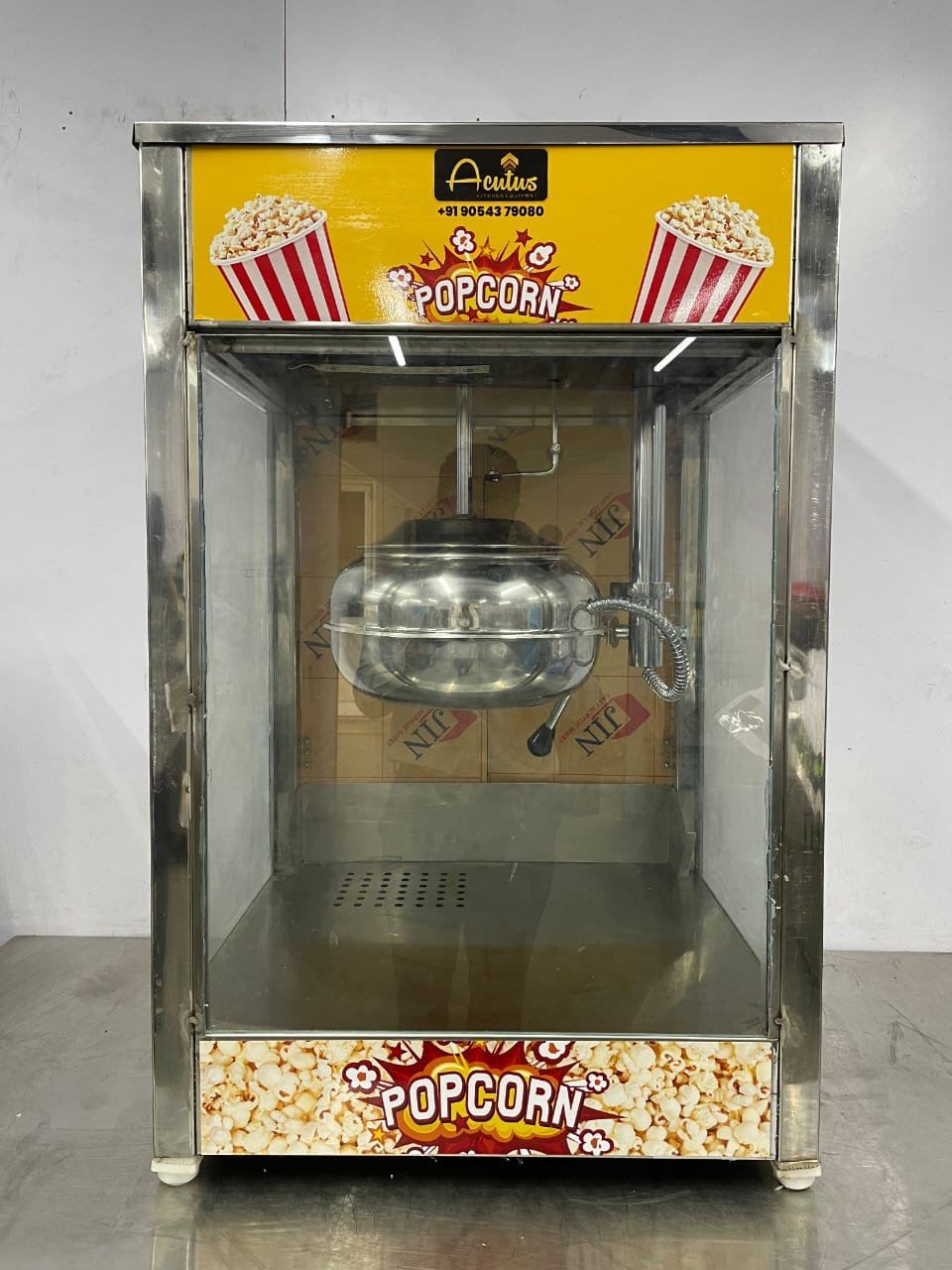
A full stainless-steel body isn't just about looks. In daily commercial use, the machine is exposed to hot oil, salt, and repeated cleaning — conditions that a regular or painted metal body starts to show wear under within months, with staining, surface rust, and a shorter working life.
ACUTUS's popcorn machines use a stainless-steel body and kettle for exactly this reason — it holds up to daily oil, salt, and cleaning without corroding, and keeps its finish over years of commercial use rather than months.
Heating Consistency & Production Output
An even heating system is what separates a batch of fully-popped, consistent popcorn from one with scorched kernels on one side and unpopped kernels on the other. Budget machines with lighter, uneven heating elements produce more waste per batch — kernels that never pop, or ones that burn before the rest catch up.
That inconsistency compounds over a full day of service. A machine with a higher, steadier production capacity keeps up with peak footfall — a queue at a cinema counter or a busy weekend stall — where a lower-capacity budget machine falls behind and customers wait.
Even Heating
Fewer unpopped or scorched kernels, batch after batch.
Higher Output
Keeps up with queues during peak footfall hours.
Upfront Price vs. Real Cost Over Time
A budget popcorn machine costs less on day one — that's the entire appeal. But a machine used for occasional or personal use is under a fraction of the load a commercial outlet puts it through. Run daily, for hours, a budget-built machine tends to need repairs, part replacements, or full replacement sooner — costs that add up and eat into the upfront savings.
A premium machine costs more to buy, but a stainless-steel body, even heating, and higher-rated components mean fewer breakdowns and a longer working life. For a business where popcorn is daily revenue — not an occasional extra — the premium machine's lifetime cost per kilogram sold usually ends up lower, not higher.
Which Popcorn Machine Should You Buy?
Choose Premium If...
You're running a cinema, mall kiosk, catering business, or any outlet where popcorn sells daily and machine downtime means lost revenue.
Budget Can Work If...
You need it for occasional events, home use, or very low-volume, non-commercial serving where daily wear isn't a factor.
Explore ACUTUS's full popcorn machine range, including Indian popcorn machines and imported popcorn machines, in table-top, cart, and digital formats.
Frequently Asked Questions
A premium commercial popcorn machine, like ACUTUS's stainless-steel range, uses a heavier stainless-steel body, an even heating system, and components rated for continuous daily use. Budget machines typically use regular metal bodies and lighter heating elements, which work fine for occasional use but struggle under sustained commercial demand.
For commercial use, yes. Stainless steel resists rust and staining from oil, salt, and daily cleaning far better than painted or regular metal bodies, which directly extends the machine's working life and reduces maintenance costs over time.
This depends on kettle size and heating system, but a well-built commercial machine with an even heating system and a higher-capacity kettle will consistently out-produce a budget machine of the same nominal size, especially over back-to-back batches.
Budget machines are generally built for lighter, intermittent use. Run continuously in a commercial setting — cinemas, malls, event stalls — they tend to show wear, uneven heating, and component failure sooner than machines purpose-built for commercial-grade daily operation.
Check the body material (stainless steel vs regular metal), ask specifically about the heating system's consistency, confirm the rated production capacity, and ask what after-sales support and warranty the manufacturer offers before you commit.
Conclusion
The difference between a premium and a budget popcorn machine isn't visible on day one — it shows up in month three, when one machine is still popping evenly at full capacity, and the other is heating unevenly and slowing down under the same daily demand.
If popcorn is a real part of your revenue, invest in a machine built for that load. Talk to us about which ACUTUS popcorn machine fits your footfall and format.

Written By
Dhaval PrajapatiFounder of Acutus Kitchen Equipment, with 10 years of hands-on experience in commercial kitchen and stainless-steel equipment manufacturing.
Want a Popcorn Machine Built for Daily Commercial Use?
Full stainless-steel body, even heating, and high production capacity — get in touch for pricing and availability.