The Complete Guide toCommercial Kitchen Equipment
Quick Answer
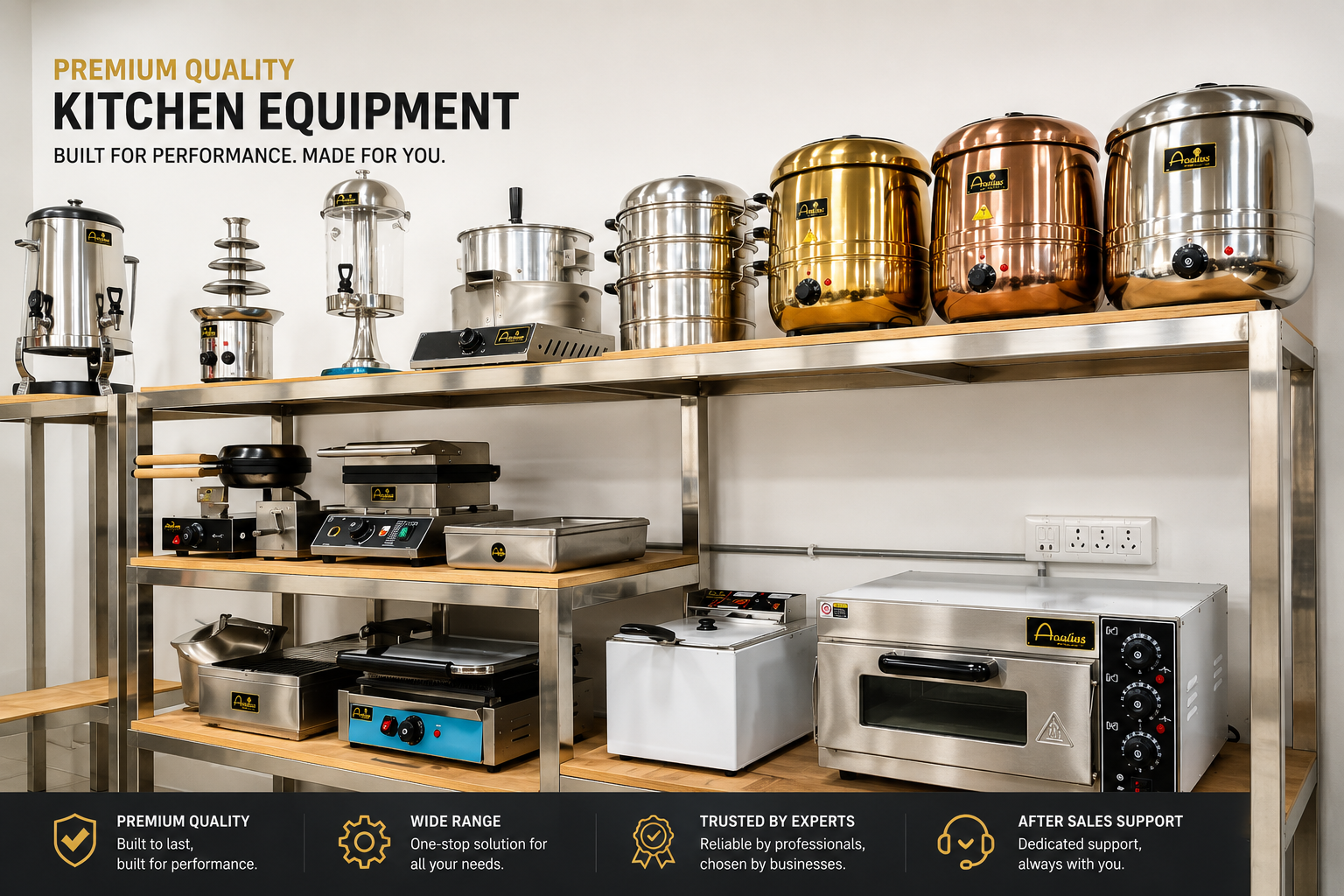
Commercial kitchen equipment refers to heavy-duty cooking, baking, beverage, and food-prep machines built for continuous, high-volume use in hotels, restaurants, cloud kitchens, and catering businesses. It differs from home appliances in build material — typically Grade 304 stainless steel — power rating, and duty cycle. The right equipment for your kitchen depends on your menu, order volume, available power or gas supply, and kitchen footprint.
Whether you're opening a restaurant, launching a cloud kitchen, fitting out a hotel kitchen, or scaling a catering business, equipment is one of the biggest and most consequential investments you'll make. Get it right, and it runs quietly in the background for a decade. Get it wrong, and you're looking at breakdowns during service, inconsistent output, and equipment that needs replacing far sooner than it should.
This guide walks through every major category of commercial kitchen equipment, why the material it's built from matters more than most buyers realise, and a practical framework for choosing the right equipment for your specific kitchen — based on what we've learned manufacturing this equipment in-house for hotels, restaurants, cloud kitchens, and catering businesses across Gujarat.
What Is Commercial Kitchen Equipment?
Commercial kitchen equipment is any cooking, baking, beverage, or food-preparation machine designed and built for continuous, high-volume use in a professional food-service environment — as opposed to occasional use in a home kitchen.
The distinction matters in three practical ways:
- Build material. Commercial equipment is typically built from food-grade stainless steel rather than painted metal or plastic components, for hygiene and durability under daily wear.
- Duty cycle. It's engineered to run for hours at a stretch, every day, rather than for occasional short use.
- Power and output. Commercial units are typically rated for higher power draw and output volume than their residential equivalents.
The Main Categories of Commercial Kitchen Equipment
Most commercial kitchen equipment falls into four broad categories, plus a fifth for kitchens that need something built to a non-standard layout.
Cooking Equipment
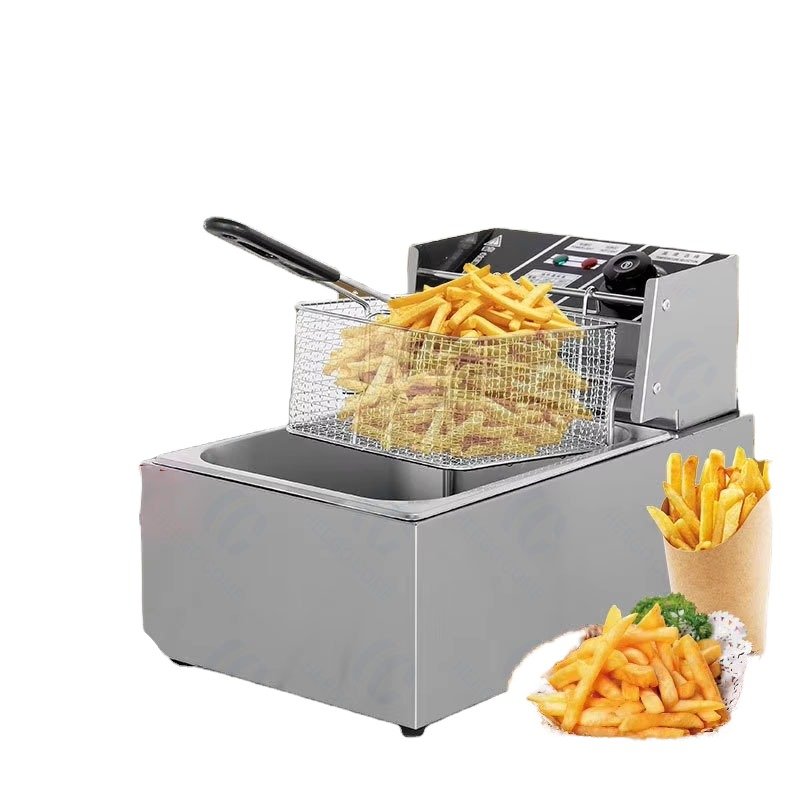
Pizza ovens, deep fryers, contact grills, bun toasters, food warmers, and chocolate warmers — built for continuous, high-heat commercial use.
Bakery Equipment
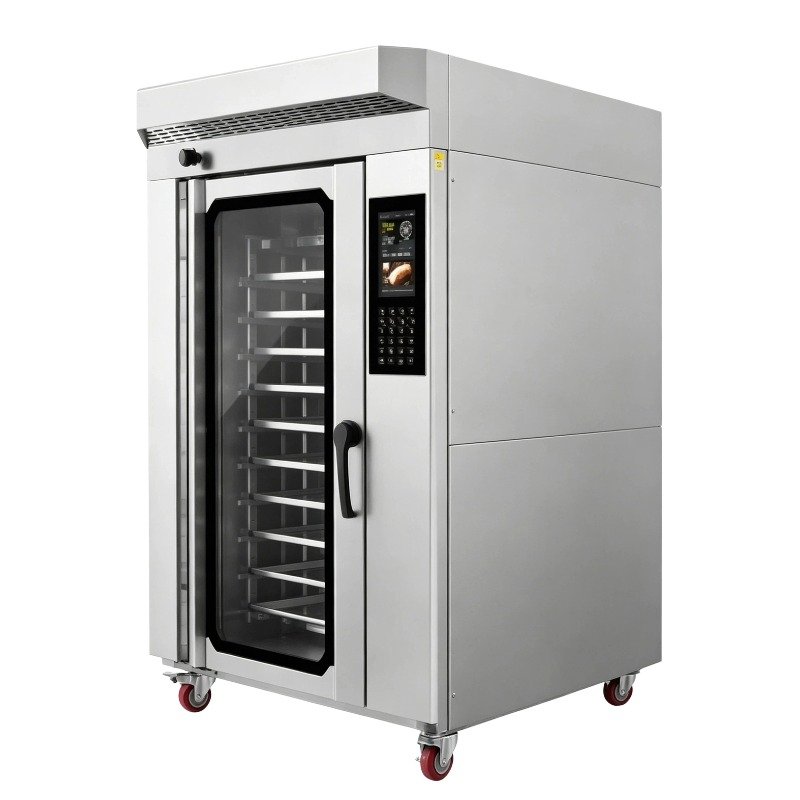
Baking ovens, rotary ovens, spiral mixers, and planetary mixers engineered for high-volume dough and baking production.
Beverage Equipment
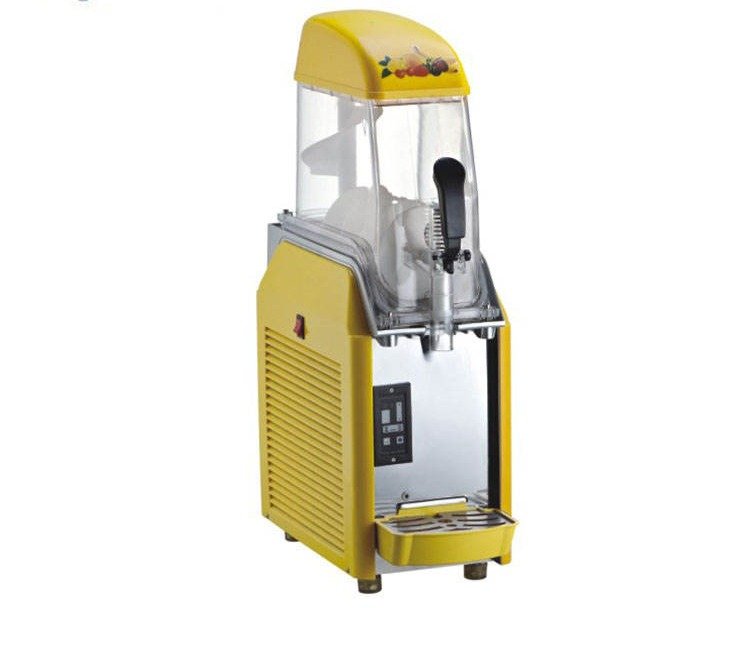
Coffee machines, juice dispensers, slush machines, blenders, and softy ice cream machines for cafés and beverage counters.
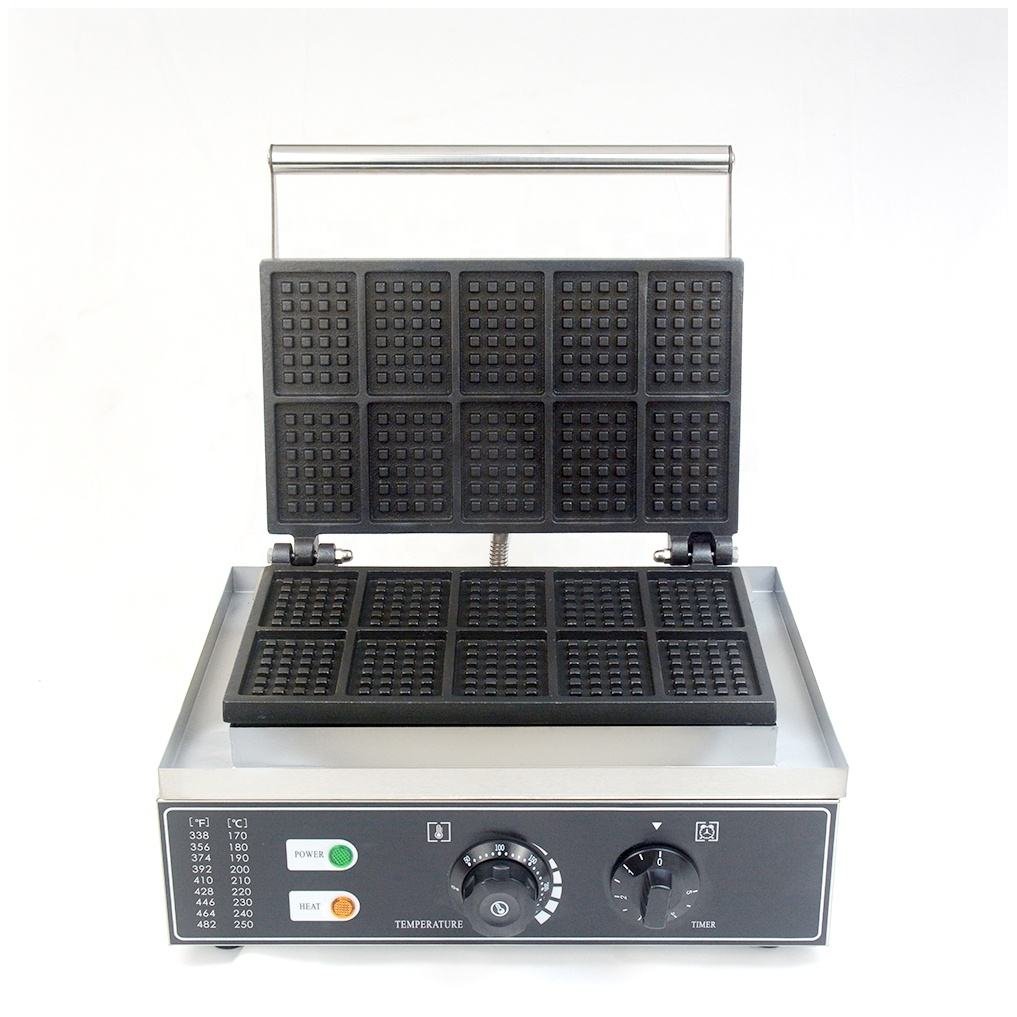
Snack Equipment
Waffle machines and popcorn machines built for continuous counter-top service in cafés and snack counters.
Explore our full cooking equipment range, browse commercial bakery equipment, or see our beverage equipment range and snack equipment machines for full specifications on every model.
For counters, sinks, and workstations that don't fit a fixed catalogue size, most manufacturers — including Acutus — also offer custom fabrication built to your exact kitchen layout.
Why Material Quality Matters: 304 vs 202 Stainless Steel
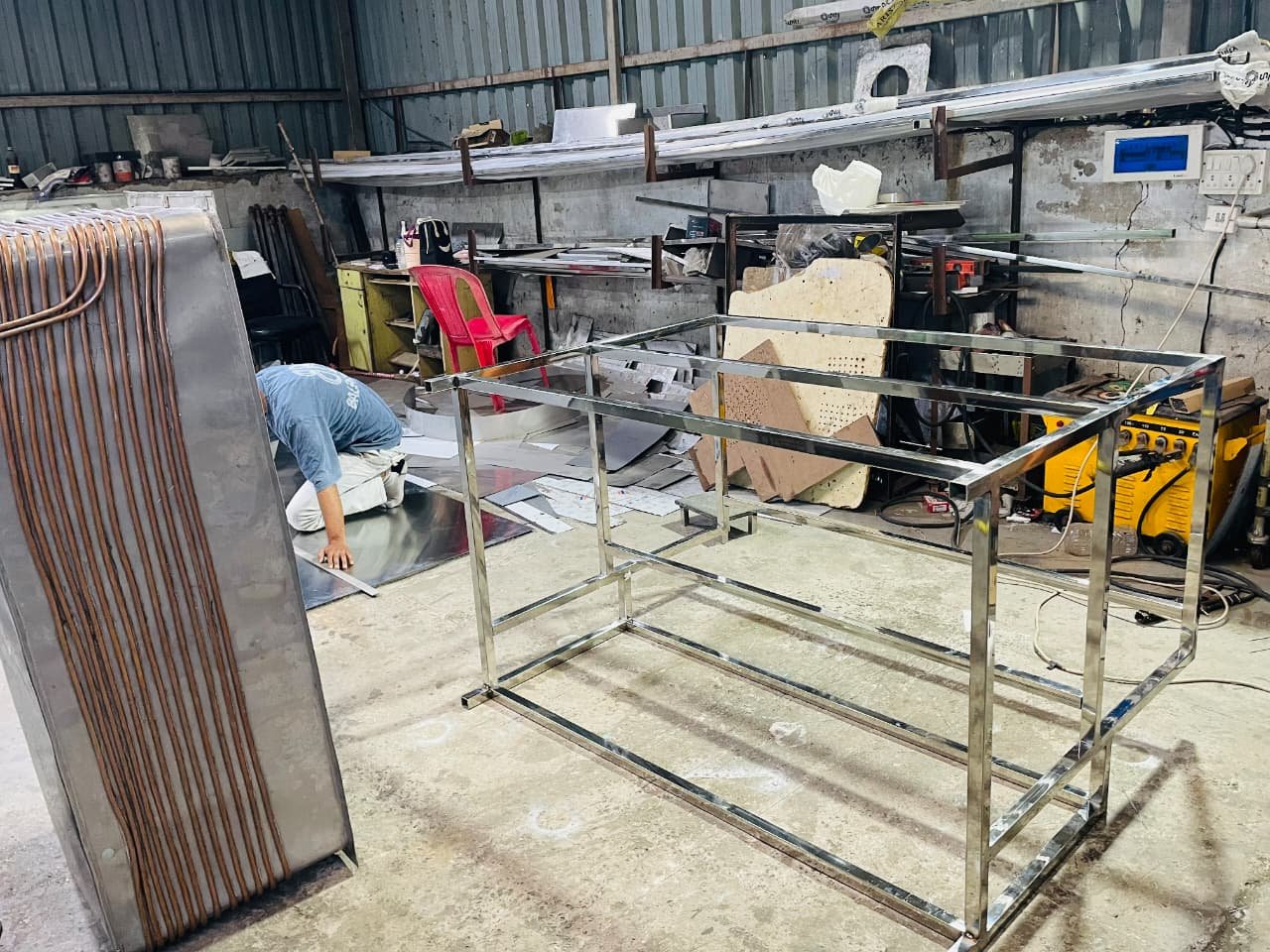
Not all "stainless steel" equipment is built to the same standard. Two grades come up most often in commercial kitchen equipment:
- Grade 304 contains a higher nickel content, giving it stronger corrosion resistance, a longer service life, and better performance under repeated cleaning with detergents and acidic food residue — the reason it's the standard choice for food-contact surfaces in professional kitchens.
- Grade 202 costs less upfront but corrodes and stains faster, and doesn't hold up as well over years of continuous commercial use.
Independent bodies such as NSF International publish widely referenced standards for food equipment materials and hygiene, and food-service operators in India generally work within the compliance framework set by the Food Safety and Standards Authority of India (FSSAI). Asking a supplier which stainless-steel grade they use — and getting a straight answer — is one of the fastest ways to gauge equipment quality before you buy.
At Acutus, every food-contact surface across our range is built from Grade 304 stainless steel. You can read more about our quality control process and material standards on our About pages.
How to Choose the Right Commercial Kitchen Equipment
1. Match Equipment to Your Kitchen Type
A hotel kitchen running multiple cuisines needs a different equipment mix than a single-menu cloud kitchen. Start by listing your actual menu and output volume, not a generic equipment checklist — it's the fastest way to avoid paying for capacity or capability you'll never use.
2. Check Power & Utility Availability
Electric and gas models of the same equipment often have different footprints, output speeds, and running costs. Confirm what power load or gas connection your site can actually support before finalising a model.
3. Plan for Your Real Order Volume
Under-sizing equipment creates bottlenecks during peak service; over-sizing wastes both capital and kitchen space. Size equipment to your busiest realistic hour, not your average day.
4. Don't Overlook Installation & After-Sales Support
Equipment that's cheaper to buy but comes without installation support or a responsive service network often ends up costing more in downtime. Confirm warranty terms and after-sales support before you compare final pricing.
In-House Manufacturing vs Buying From a Dealer

Equipment sold by a dealer or reseller has usually passed through one or more middlemen between the factory and your kitchen — which can mean longer lead times, less flexibility on customisation, and a support chain that's harder to reach when something goes wrong.
Buying directly from an in-house manufacturer typically means faster turnaround, direct accountability for build quality, and a manufacturer who can custom-fabricate non-standard requirements rather than only offering catalogue sizes. Read more about how Acutus manufactures its equipment and our in-house manufacturing facility in Ahmedabad.
Installation, Warranty & After-Sales Support
Before you finalise any commercial kitchen equipment order, get clear answers on three things:
Installation
Is on-site installation included, or billed separately?
Warranty
Does it cover fabrication and material defects, and for how long?
Spare Parts
Can the supplier get you spares quickly if something fails?
At Acutus, on-site installation guidance and a staff walkthrough are included with every order, backed by a manufacturer warranty against fabrication and material defects and a dedicated service team for maintenance and spare parts. See our full quality and warranty process.
Frequently Asked Questions
Commercial kitchen equipment refers to heavy-duty cooking, baking, beverage, and food-prep machines built for continuous, high-volume use in hotels, restaurants, cloud kitchens, catering businesses, and institutional kitchens. It differs from home appliances in build material, power rating, and duty cycle.
Grade 304 stainless steel is the standard for food-contact surfaces in commercial kitchen equipment, chosen for its corrosion resistance, hygiene compliance, and long service life under continuous use.
Yes. Many manufacturers, including Acutus, custom-fabricate counters, sinks, and workstations to a client's exact kitchen layout and dimensions rather than fixed catalogue sizes.
This varies by supplier. Acutus provides on-site installation guidance and a staff walkthrough on operation and care with every order.
Look for a manufacturer warranty covering fabrication and material defects, backed by a dedicated after-sales service team for maintenance, spare parts, and troubleshooting.
Conclusion
Choosing commercial kitchen equipment comes down to a handful of decisions that compound over years of daily use: the right category of equipment for your menu, a material grade that won't corrode under continuous cleaning, sizing that matches your real order volume, and a supplier who stands behind installation and after-sales support — not just the sale.
Get those right, and equipment becomes something you stop thinking about — which is exactly what it should be in a working commercial kitchen.
Written By
Dhaval PrajapatiFounder of Acutus Kitchen Equipment, with 10 years of hands-on experience in commercial kitchen and stainless-steel equipment manufacturing.
Have a Kitchen Equipment Requirement?
Share your requirement and our team will get back with pricing, availability, and delivery timelines.